

Build environment size in the SDK image builder
The SDK image builder’sbuild() method accepts buildMemory and buildVolume (build_memory and build_volume in Python) to size the environment an image is built in, like bl push --memory and --volume. Use them when a large image runs out of memory or disk during the build. Available in @blaxel/core 0.3.28 and blaxel 0.4.16.Network-level domain filter enforcement
Sandboxes can now enforce domain filtering at the network level withnetwork.firewall: { rulesets: ["proxy"] }, so traffic from tools that ignore HTTP_PROXY/HTTPS_PROXY is still filtered. Available on Mark 3.0 infrastructure.OpenAI Agents API on Blaxel
The OpenAI Agents API integration reference covers running OpenAI-hosted agents in Blaxel Sandboxes, keeping files on Agent Drive, and reconnecting workers through a webhook handler. It includes credentials, shared files for agent teams, lifecycle rules, configuration, and cleanup. The cookbook currently requires Agents API preview access.Follow the tutorial to run the public cookbook, hand files to a fresh agent, coordinate parallel specialists, and verify a replacement worker reads the previous worker’s files.Herdr sandbox tutorial
The Herdr tutorial walks through running a coding agent in a persistent Blaxel sandbox, reconnecting to its session, opening a private application preview, and applying reviewed changes to a local Git worktree. It includes an invoice summary example and static screenshots of the dashboard and apply workflow.Snapshots as workspace resources
Snapshots have their own name and API at workspace level. A snapshot outlives the sandbox it was captured from, and carries the configuration needed to fork it into a new sandbox or application once its source is gone.DeepSeek Harness sandbox plugin
@blaxel/dsh-sandbox runs DeepSeek Harness filesystem, Bash, and terminal tools inside a Blaxel sandbox while the DSH interface, model requests, and credentials stay on your computer. Move a session to Blaxel and back with a conflict-checked return. See the tutorial.Method and path matching for sandbox egress rules
Sandbox domain filtering now supports HTTP method, path prefix, wildcard, and negation patterns, letting you restrict outbound access beyond domain-level allowlists and denylists.Dynamic value injection in the sandbox proxy
Proxy routing rules can now generate UUIDs, timestamps, nonces, and other dynamic values for every request. Inject them into headers and body fields for idempotency keys, request IDs, and other one-time values.S3-compatible access for Agent Drive
Every Agent Drive instance now exposes an S3-compatible endpoint, so you can access its contents with the AWS CLI, boto3, or the AWS SDK for JavaScript without mounting the drive into a sandbox.Sandbox snapshots and forking
Our biggest update since we launched sandboxes!In private preview, create point-in-time snapshots of a sandbox, roll back to an earlier checkpoint, or fork its filesystem, running processes, and memory state into a new sandbox.Application Runtime
Introducing Application Runtime in private preview for deploying long-running web servers, APIs, dashboards, and other services on stable public endpoints.Share custom domains across workspaces
Verified preview custom domains can now be shared with another workspace. Shared domains remain read-only in target workspaces and can be used for their sandbox previews.Carbon (a.k.a. Mark 3.1) infrastructure
Introducing Carbon! The latest iteration of Blaxel’s microVM-based infrastructure, in private preview.Carbon infrastructure enables long-awaited features such as manual snapshotting, forking, and much more!Agent Drive permissions
Added support for restricting read/write access to Agent Drive files and folders using label-based ACL rules.Pagination support in SDKs
Added pagination support for list operations in all SDKs.Pagination support in Management API
Added pagination support for list operations in Management API.Sandbox schedules
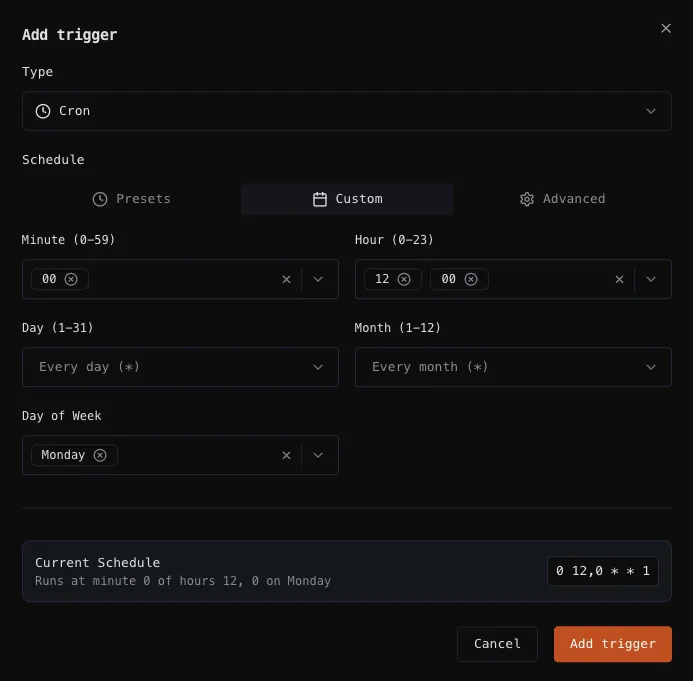
Run a command inside a sandbox on a fixed schedule: recurring cron, at a future date, or after a delay.Clear sandbox TTL and lifecycle policies
The SDKs can now clear a sandbox’s expiration rules without recreating it. Passnull/None (or an empty string for the TTL) to updateTtl and updateLifecycle to make a sandbox persist again.Sandbox runtime telemetry
The sandbox API now reports internal errors to Sentry for improved reliability monitoring. All telemetry is anonymized. Opt out via the--disable-telemetry flag or by setting TELEMETRY_ENABLED=false. See Sandbox runtime error reporting.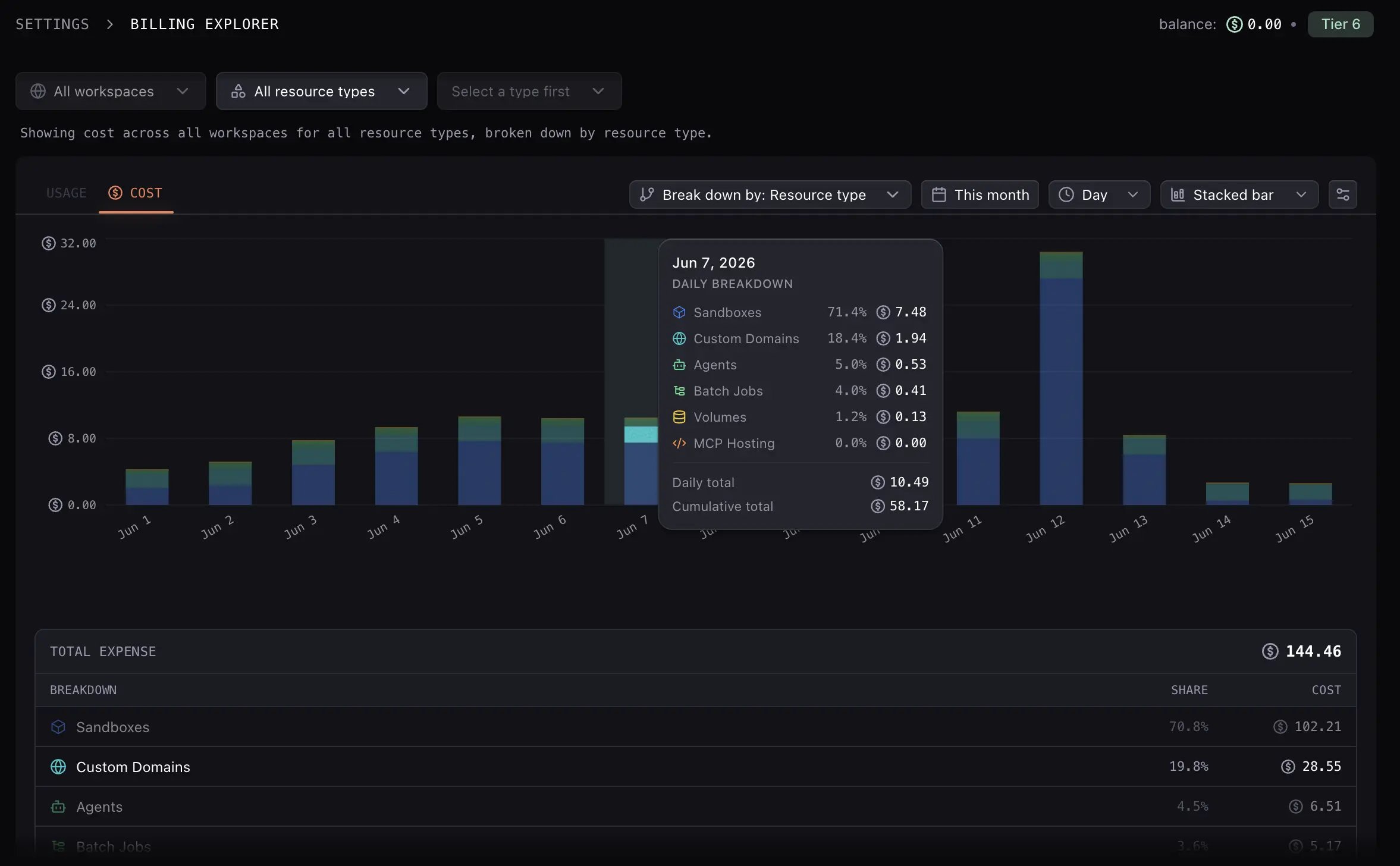
Self-host Claude Managed Agents on Blaxel
Blaxel now integrates with Claude Managed Agents (CMA), allowing you to self-host the sandbox execution layer while keeping the agent loop entirely within Anthropic’s platform. Every tool call an agent makes in a CMA session runs inside a Blaxel sandbox: command execution, file operations, and code execution happen in fully isolated environments.See the tutorial for a step-by-step walkthrough.Stripe Projects integration
Blaxel is officially integrated with Stripe Projects. You and your agents can use existing Stripe payment methods to provision Blaxel accounts and resources, all without needing any GUI.Fallback preview URLs for custom domains
You can now designate one preview as the fallback or catch-all for a custom domain. When a preview doesn’t exist on this domain, requests will be routed to this fallback preview instead of returning a 404.Multi-dimension groupBy support in Billing API
The Billing API now supports multi-dimension grouping with up to 3 dimensions. When multiple dimensions are specified, results are grouped by their cross-product.Support for private image registries
Private image registries are now supported for deployments.Further rollout of proxy and egress gateway features
Proxy and egress gateway now available in all regions.New Billing Explorer API
Added Billing Explorer API to enable programmatic retrieval of cost and usage metrics for a Blaxel account.Cross-account image sharing
Added image sharing across accounts.Rich error messages
Updated platform error messages with additional information, for autonomous use by agents and LLMs.Deploy multiple jobs from a single image
Build a job image once and reuse it across multiple job definitions with different memory, disk, or region profiles, without rebuilding.Cross-workspace image sharing
Added image sharing between workspaces in the same account.New proxy and network features
Added new sandbox networking features in private preview:- proxy routing (MITM header/body injection with secrets)
- domain filtering (allowlist/denylist firewalls)
Removed OpenClaw agent template
Removed OpenClaw agent template. OpenClaw can still be manually installed and configured to run inside a Blaxel sandbox.
Removal of WebSocket support for MCP calls in Python and TypeScript SDKs
TypeScript SDK v0.2.73+ and Python SDK v0.2.45+ no longer support calling MCP servers over WebSocket transport. Use streamable HTTP instead.New identity and access management features
Added enterprise identity and access management features:- Domain capture: Verify your company’s email domain and control which login methods your team can use.
- SSO and Directory Sync (SCIM): Integrate with your existing identity provider using SAML Single Sign-On (SSO) and automate user provisioning via Directory Sync (SCIM).
New Blaxel Migration Skills
Added Blaxel Migration Skills to help coding agents migrate sandbox code from other providers, including Daytona, E2B and Modal, to Blaxel.Private preview of dedicated egress gateways
Added the ability to attach dedicated egress gateways to your workloads, making it easier to whitelist outbound traffic from Blaxel.New Blaxel Skill
Added Blaxel Skill to let coding agents create sandboxes, deploy agents, run jobs, and launch apps, all from natural-language prompts.Native support for “code mode”
Added “code mode” support, enabling more efficient tool calling over MCP.Improved build control for sandbox images
Added ability to opt out of our automatic slimming process for sandbox images, by settingslim = false.Public access for agents on Mark 3 infrastructure
Added support to expose agents publicly without authentication on Mark 3 infrastructure.Improvements to sandbox process management and logging
- Added ability to view logs for specific processes within a sandbox:
bl logs sandbox my-sandbox my-process - Support for real-time log streaming with
-f/--followflag for sandbox processes (similar to tail -f) - Added new command to list processes in a sandbox:
bl get sandbox my-sandbox process(orbl get sbx my-sandbox ps) - New
.oyamland.ojsonoutput formats for process listings
The Big CLI Upgrade
- Added shell completion for CLI commands including workspace, sandbox, job, agent, function, model, volume, policy, and image names
- Tab completion now suggests valid resource names as you type, reducing errors and improving efficiency
- Simplified syntax for filtering job logs by execution and task:
bl logs job my-job <execution-id> <task-id> - New token refresh functionality for authentication operations:
bl token - Various bug fixes and documentation improvements
Go SDK released
Released a new Go SDK. This provides access to the Blaxel REST API from applications written in Go.New API reference
Updated the management API reference documentation.New API endpoint for public IP address retrieval
Added a new API endpoint to retrieve the current list of public IP addresses used by Blaxel.Browser-based terminal for sandboxes
Added browser-based terminal for interactive sandbox access and exploration through a web browser.New Jobs API endpoints and SDK methods
Added new Jobs API endpoints and corresponding TypeScript and Python SDK support to programmatically manage long-running job executions with multiple tasks.Deprecation of BL_SERVER_HOST and BL_SERVER_PORT variables
Transitioned to conventional HOST and PORT environment variables to specify the IP address/hostname and port on which agents or MCP servers should listen when deploying on Blaxel. The previous BL_SERVER_HOST and BL_SERVER_PORT variables will continue to be supported for compatibility.
Relace support
Added Relace support for fast apply in the codegen tools of a sandbox MCPBinary support for sandboxes
- Added
readBinary()function for sandbox filesystem to return a file’s content as a standard Blob object - Added
writeBinary()function for sandbox filesystem to write a Buffer/Blob - Added
download()function to download a file from the sandbox’s file system to your local machine.
HTTP Stream transport for MCP servers
- HTTP Stream is now the default transport for all MCP servers deployed on Blaxel, following Protocol Revision 2025-03-26.
Mk 3 is now the default generation
Mk 3 is now the default infrastructure generation for all new agents and MCP servers. Here’s how versioning works:- Creating a new agent or MCP server without specifying a version → defaults to Mk 3
- Updating an existing Mk 2 agent or MCP server without specifying a version → remains on Mk 2
- Attempting to update a Mk 2 agent or MCP server to Mk 3 → returns an error
- Updating an existing Mk 3 agent or MCP server without specifying a version → remains on Mk 3
- Attempting to downgrade a Mk 3 agent or MCP server to Mk 2 → returns an error
Storage pricing
For all customers on our Pay-as-you-go plan, we will begin charging for storage costs:- starting November 7, 2025 for Sandbox Snapshots and Sandbox Volumes.
- starting December 1, 2025 for stored deployment Images.
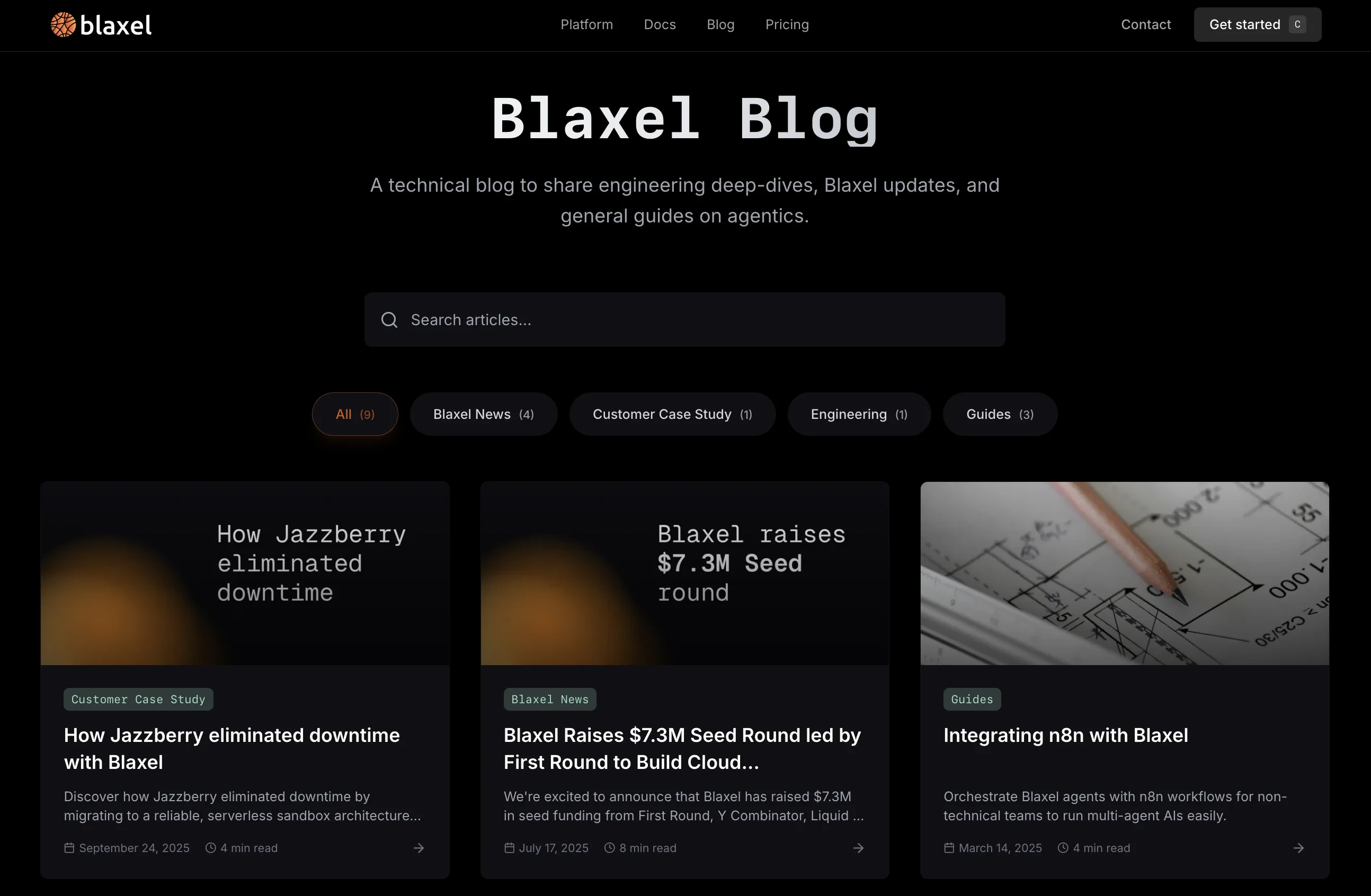
Blaxel Blog
New sandbox builder
- Our new builder has been successfully rolled out with optimized performance for image downloads and adjusted timeouts.
- Key improvements:
- Larger image support: Images can now exceed 10GB
- Optimized file system: Better memory management with in-memory speed
- Faster startups: Further reduced cold start times
- Cost efficiency: Overall lower costs due to system optimizations
Sandbox lifecycle policies
Set time-to-live & expiration policies on a sandbox to automatically delete it based on specific conditions:- expire at a specific date using the
expiresparameter. - expire after a total maximum lifetime using the
ttlparameter - expire after a period of inactivity using the
lifecycle.expirationPolicies/lifecycle.expiration_policiesparameter
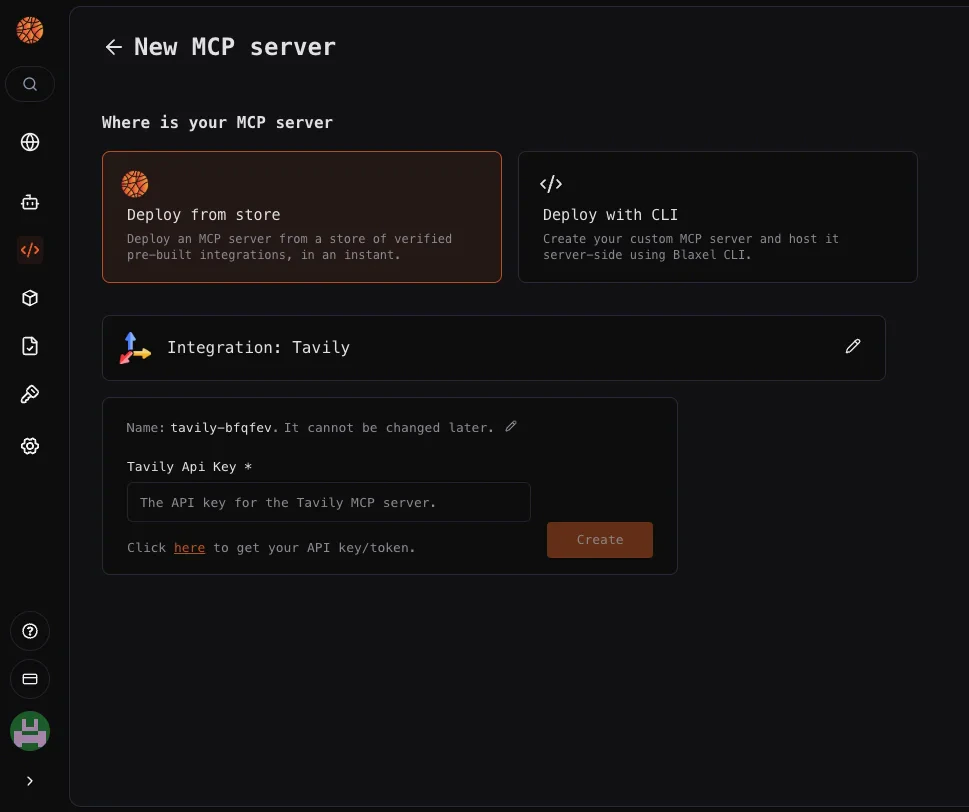
New MCP server: Linkup
Added new MCP server: Linkup
New MCP server: Nia
Added new MCP server: Nia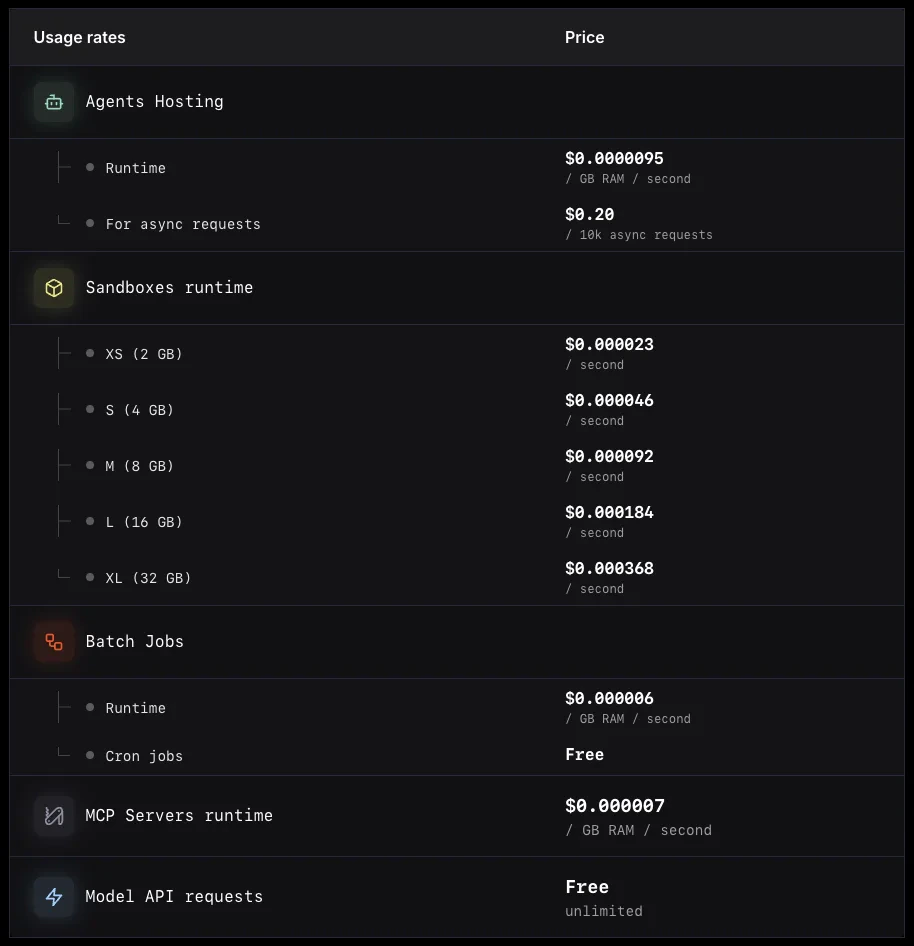
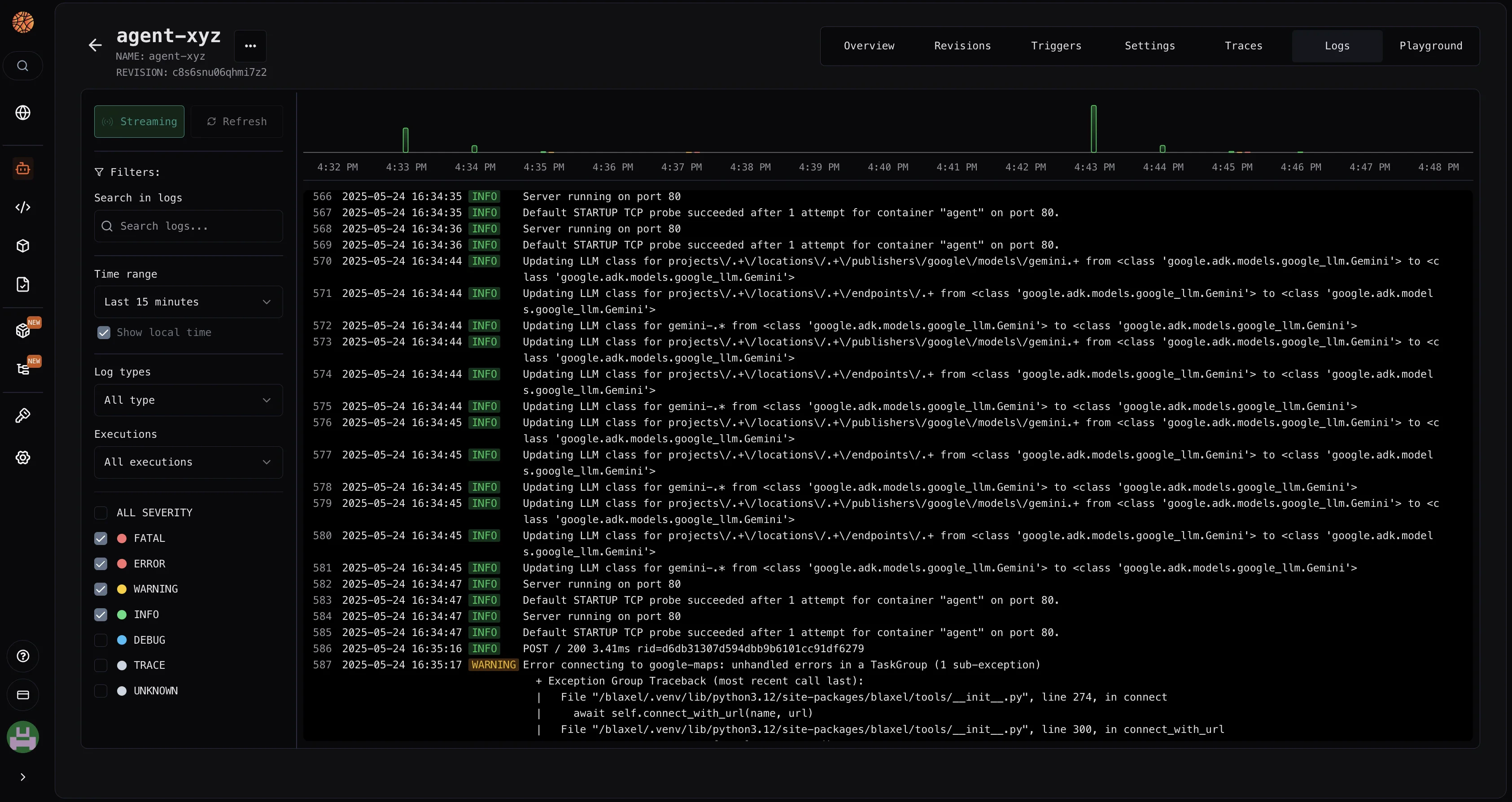
Sandbox tools for codegen
- Added fast apply of file edits powered by MorphLLM for efficient code changes (2000+ tokens/second)
- Added multiple other codegen-optimized functions by making tool calls through the MCP server of a sandbox.
Sandboxes file system improvements
- Added ability to watch sub-directories
- Added ability to ignore some files/directories from watch
- Added ability to write multiple files at once
- Added ability to write binary content in the fs
- Added ability to get both stderr/stdout logs at once in batch mode
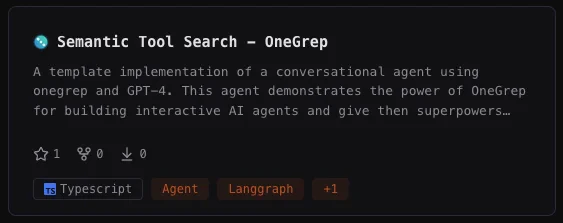
OneGrep Integration
Sandboxes
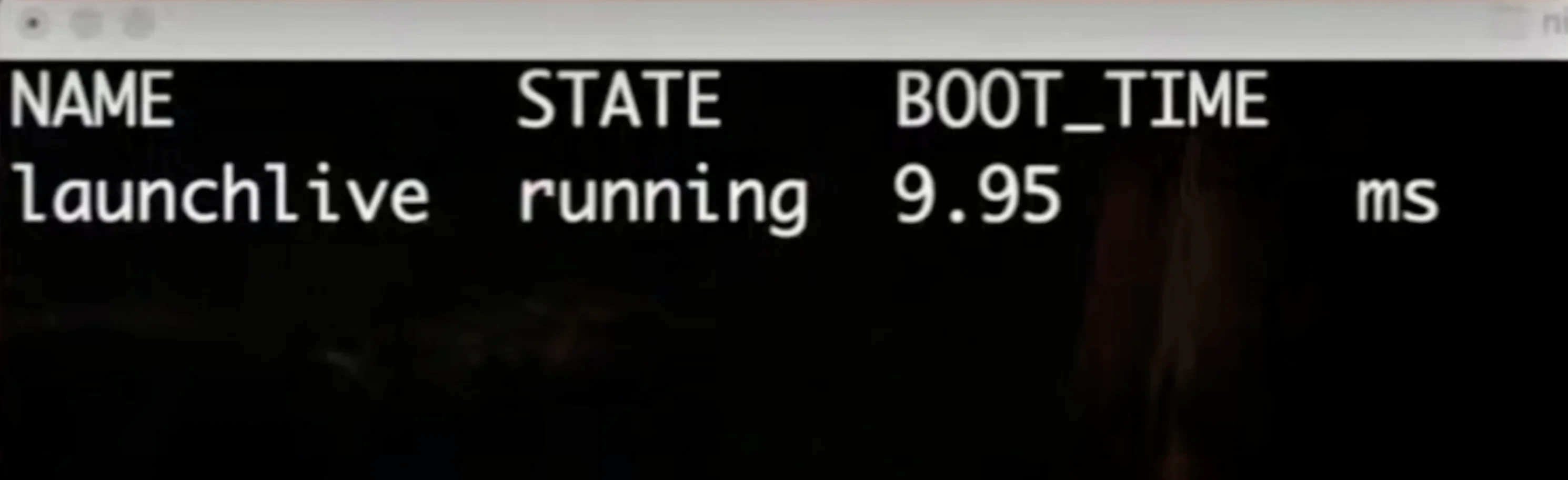
- Boot time under 20ms
- Persistent filesystem across sessions
- Operable via both Python/TypeScript SDK and MCP server
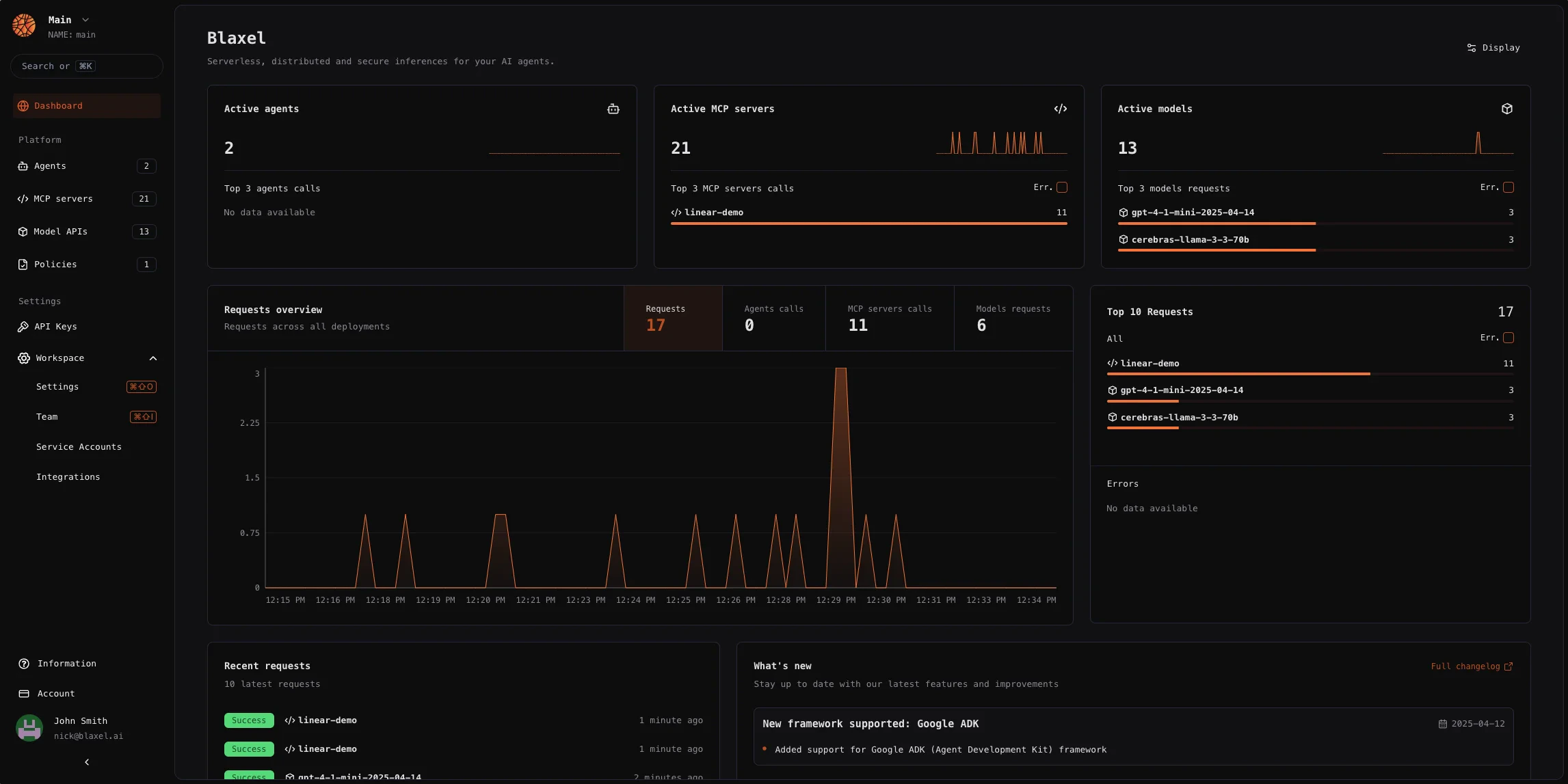
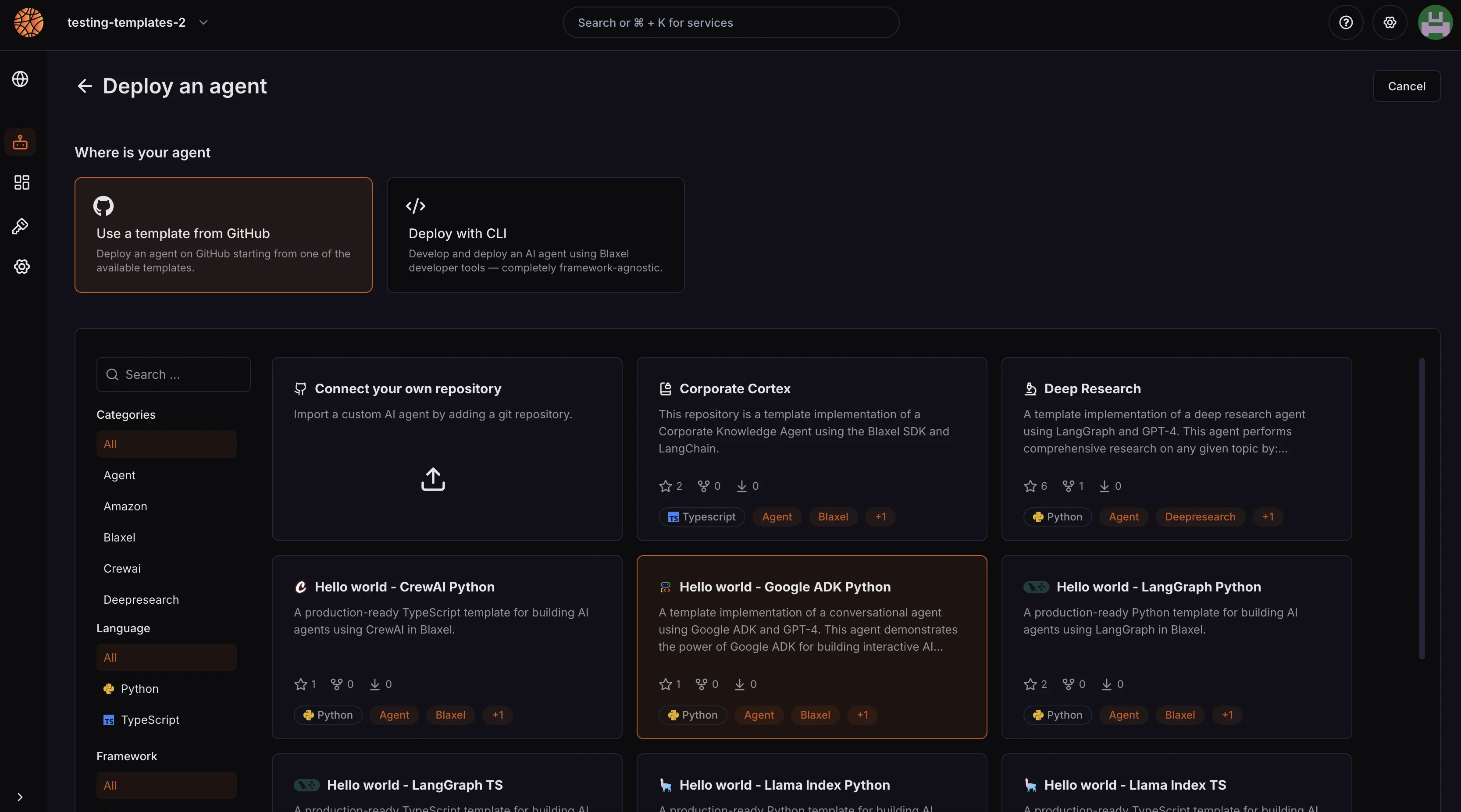
SDK v0.1.0

- Released a new major version of our SDK to give you access to lower-level features:
- host custom MCP servers
- connect to LLM via Blaxel gateway
- connect to tools hosted on Blaxel
- Compatibility with all major agentic frameworks from day 1: LangChain, LangGraph, CrewAI, LlamaIndex, OpenAI Agents, Vercel AI SDK, Mastra.
- Improved cold-starts for agents and functions
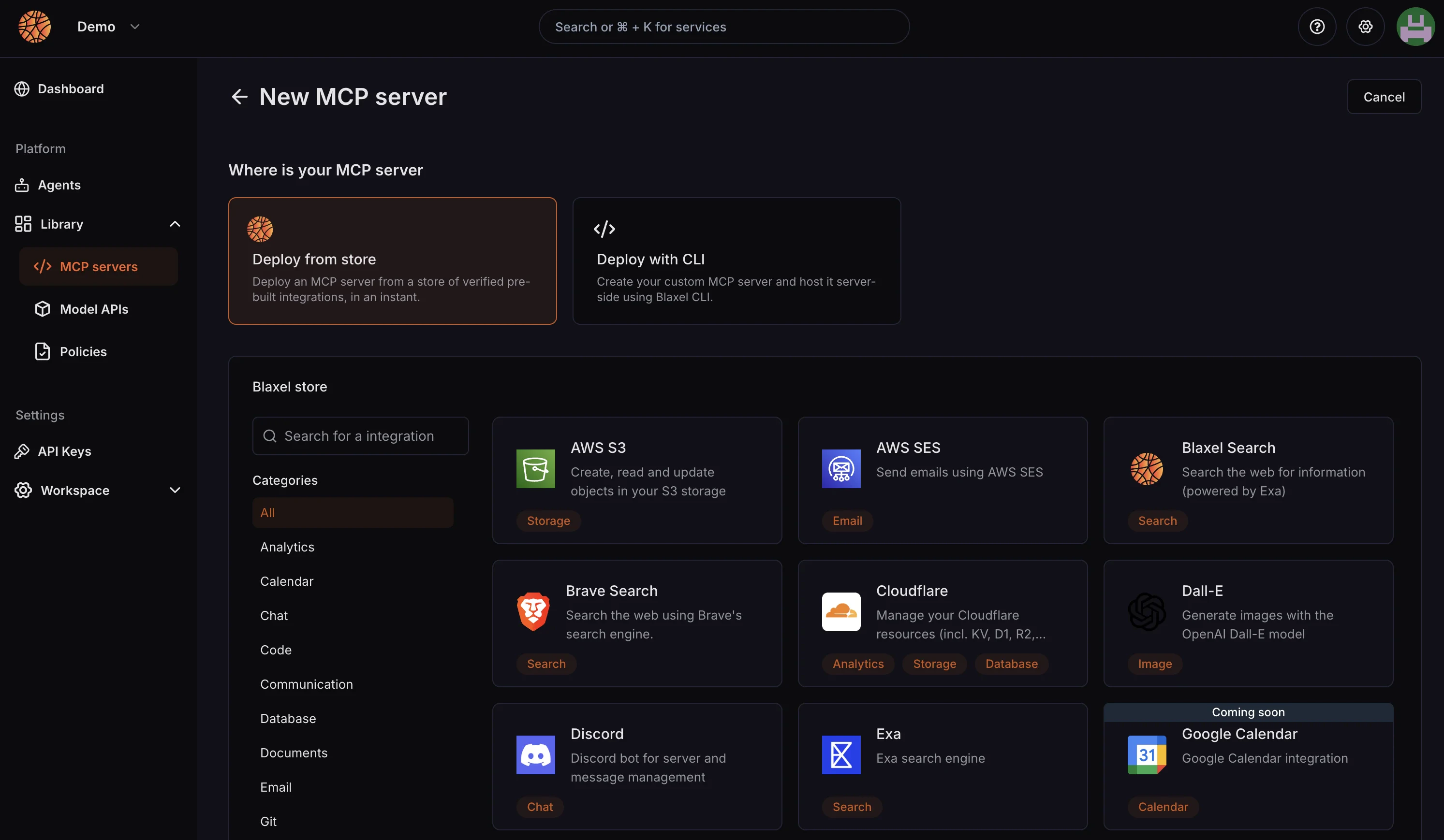
Templates of agents
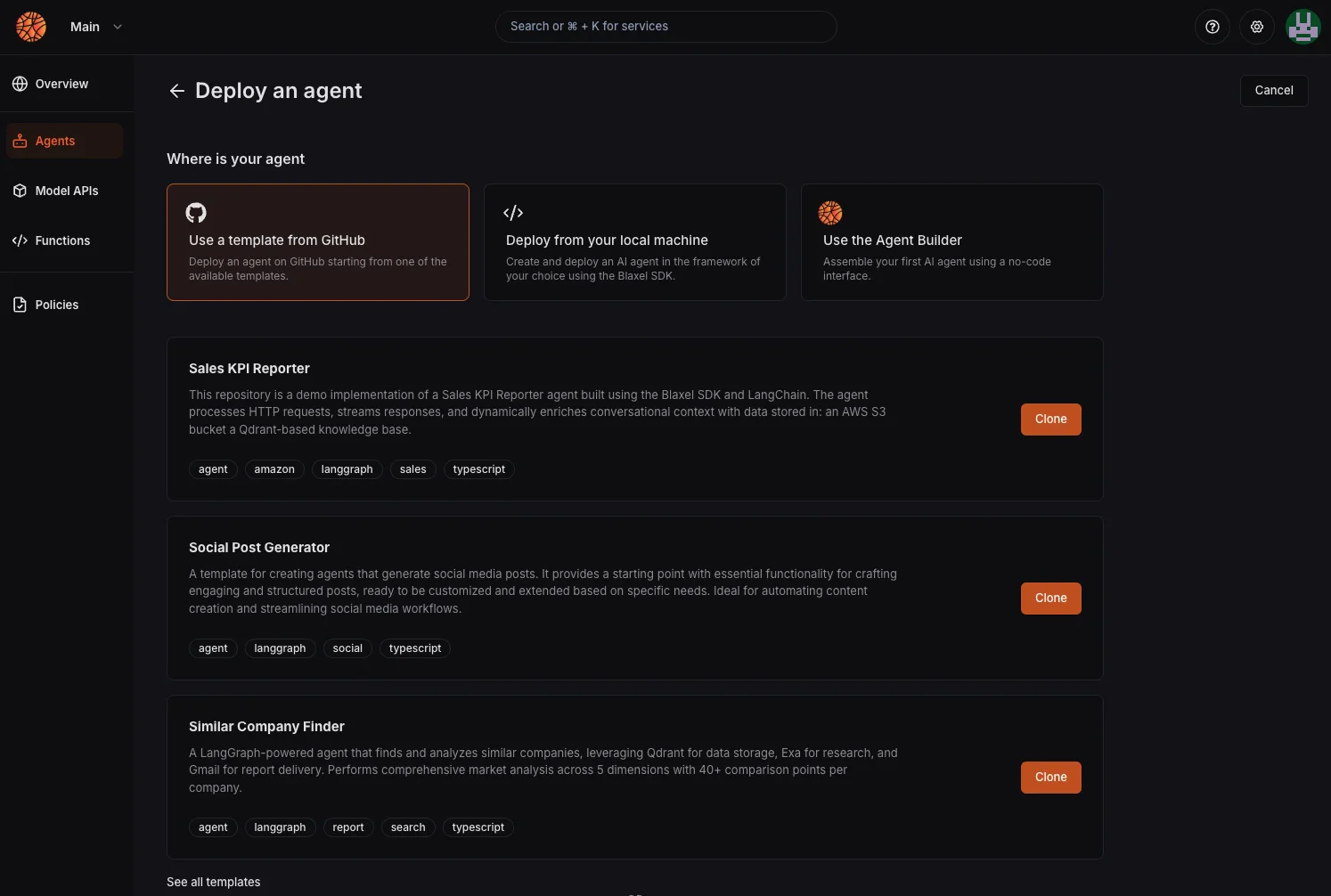
- Added 6 templates of agents
- Templates can be used when creating a new agent from the Blaxel Console. Deploying a template will deploy the agent on your GitHub organization and set up a live synchronization watching future updates
- The entire template list is available on our website
- Added information in Blaxel Console that an agent is synchronized via GitHub
- Updated the schema for functions to better match MCP standard
Revisions & canary deployments
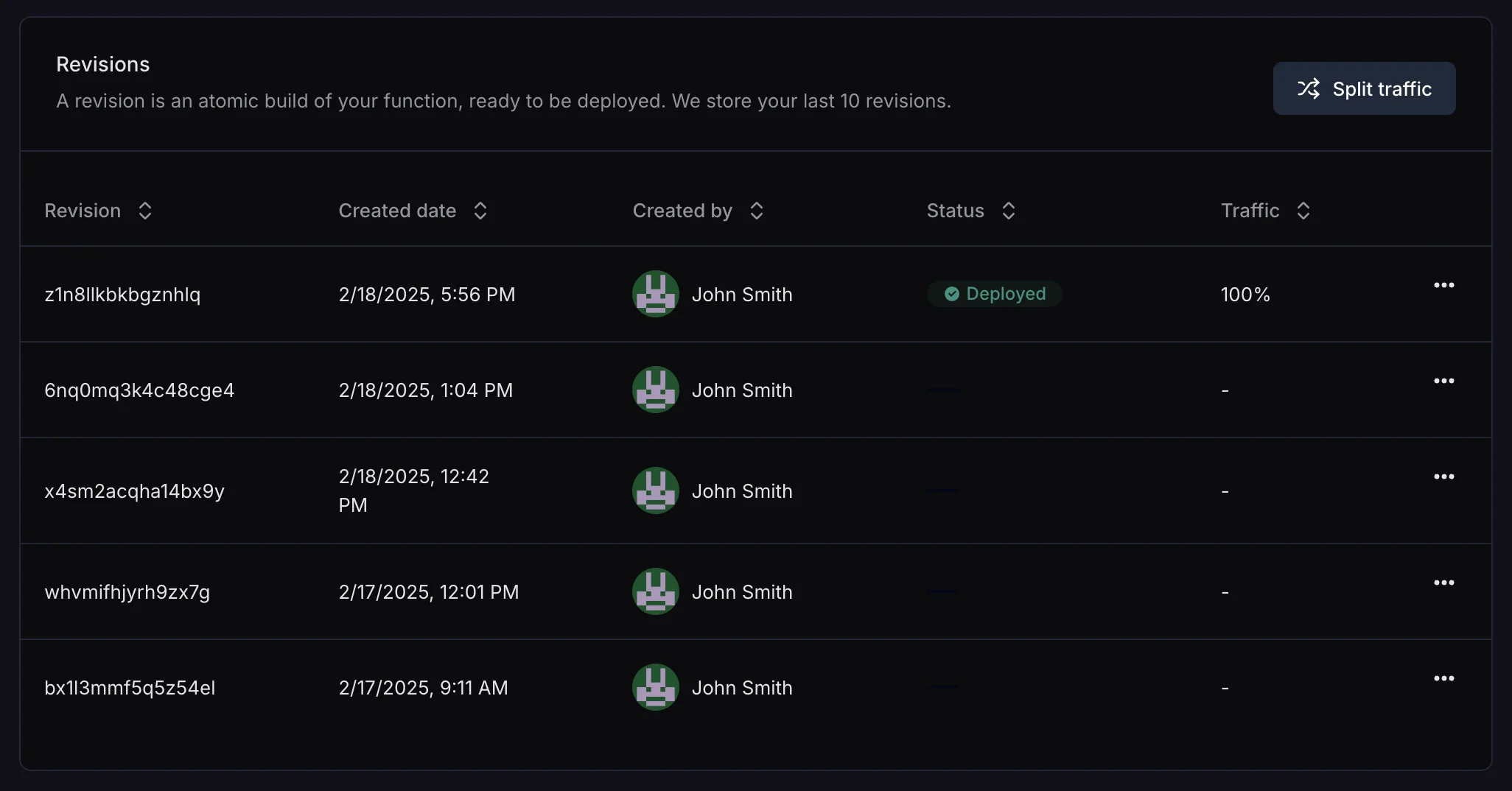
- Each build of an object creates a new immutable revision, which can be deployed to redirect request traffic to it
- Ability to deploy a new revision using blue-green strategy
- Ability to roll back to previous revision
- Ability to split a percentage of traffic to a second revision (canary deployments)

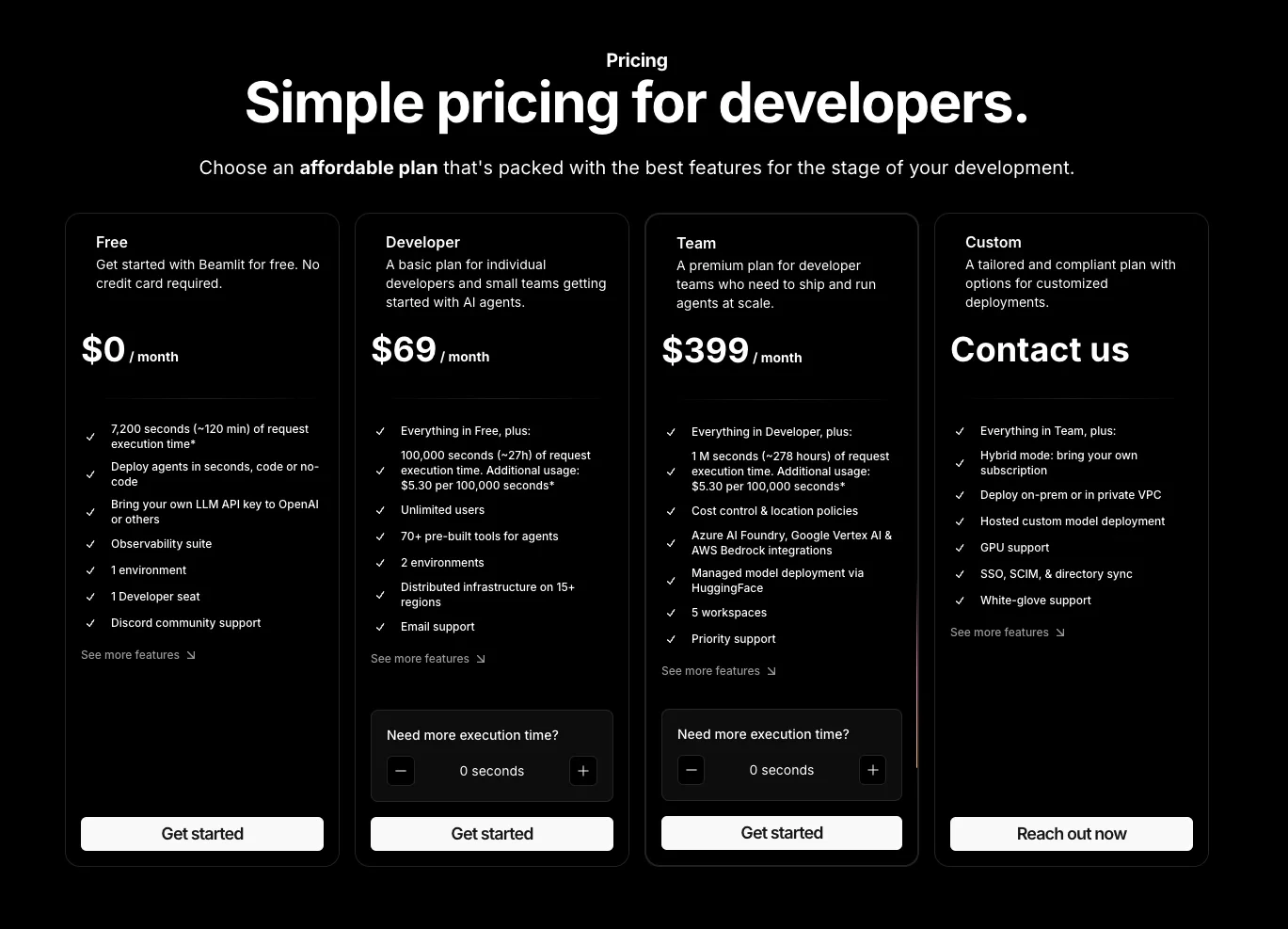
New pricing plans
HuggingFace integration
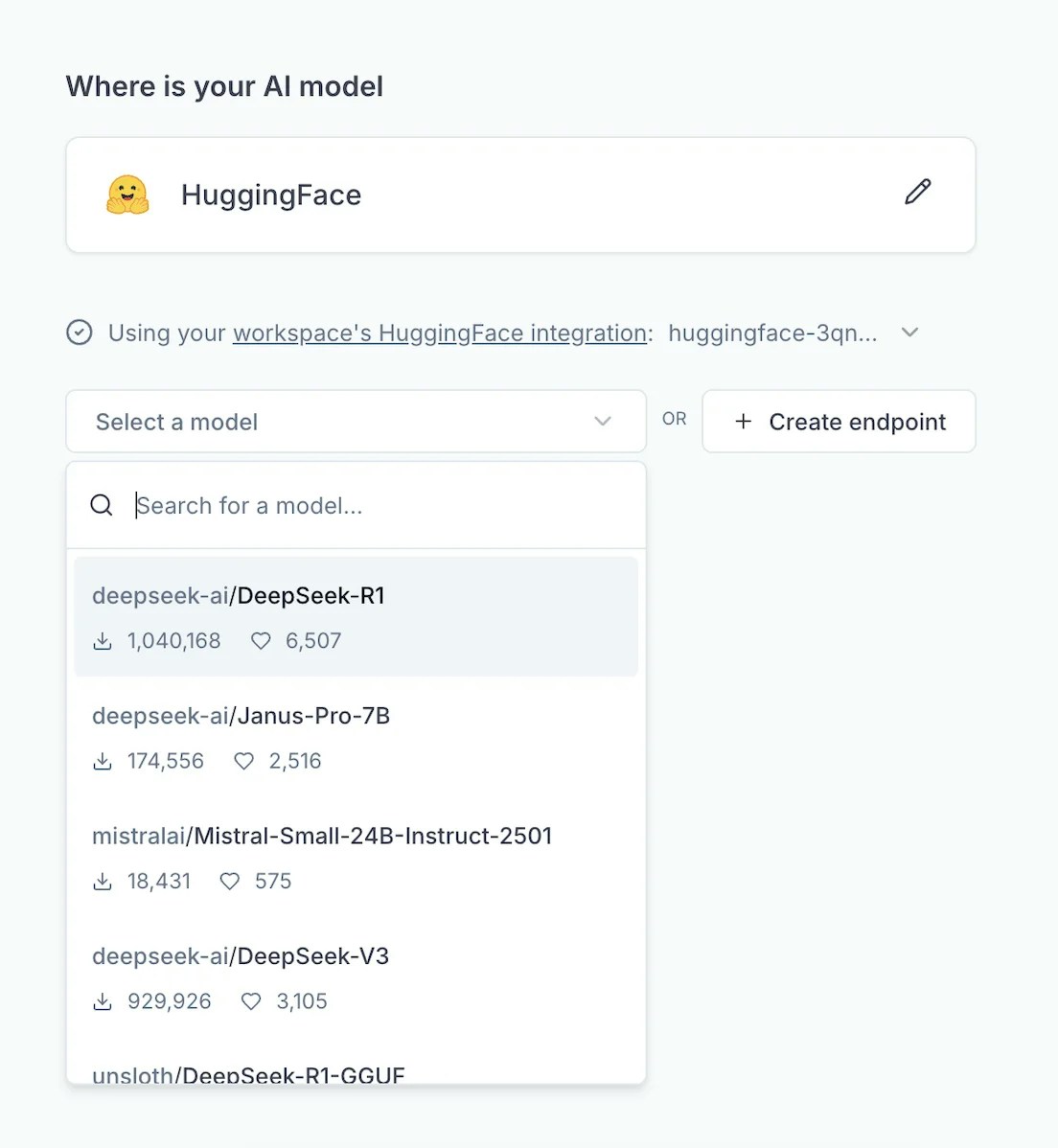
- Connect to public or private models from HuggingFace Inference API (serverless) and Inference Endpoints (dedicated)
- Deploy a model in HuggingFace Inference Endpoints (dedicated)
Azure AI Foundry integration
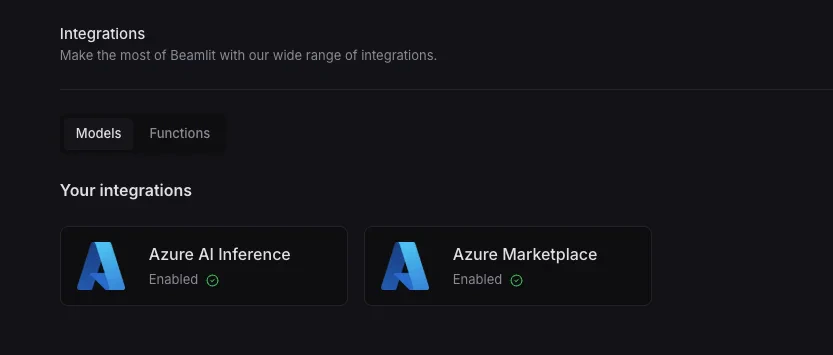
- New integration: Azure AI Services (for OpenAI models and others)
- New integration: Azure Marketplace (for Llama models and others)
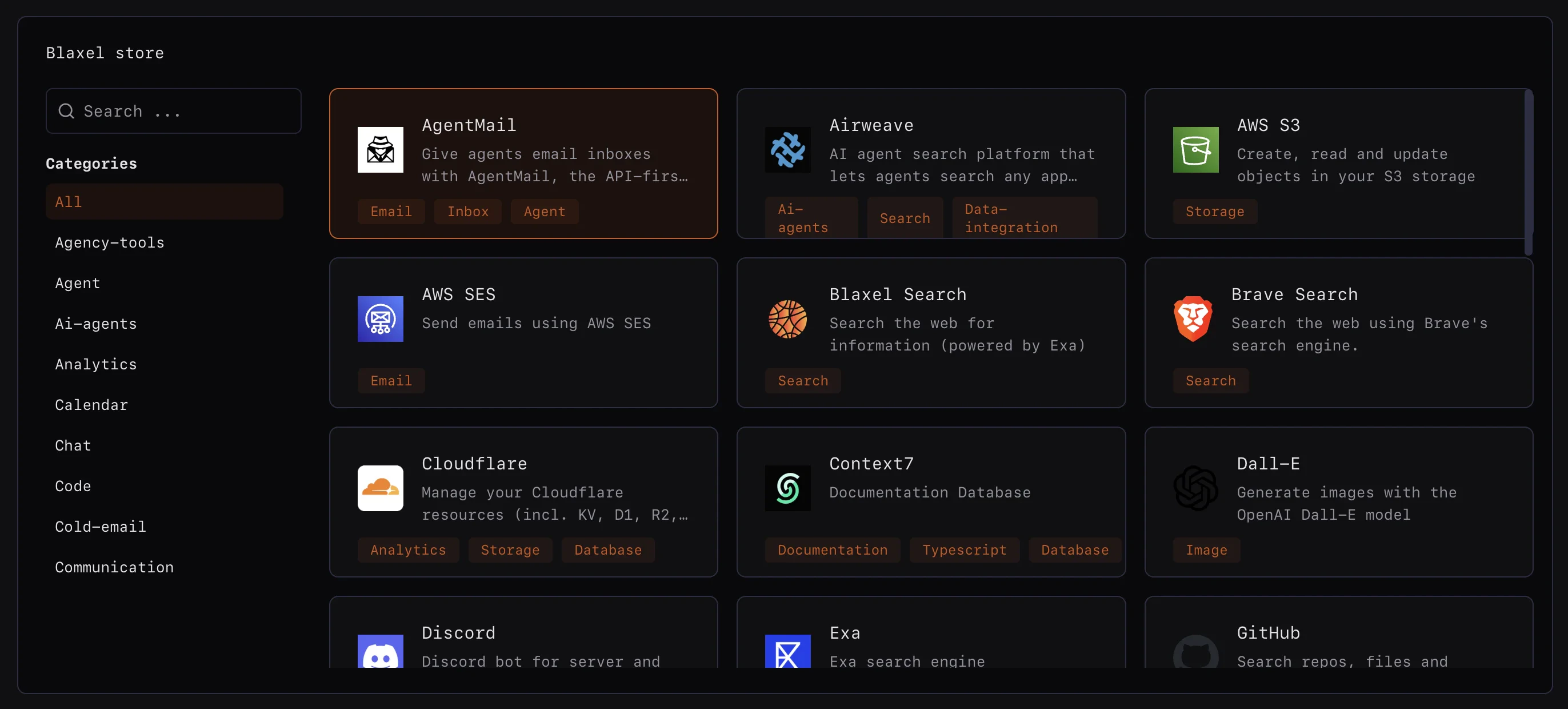
9 new pre-built toolkits
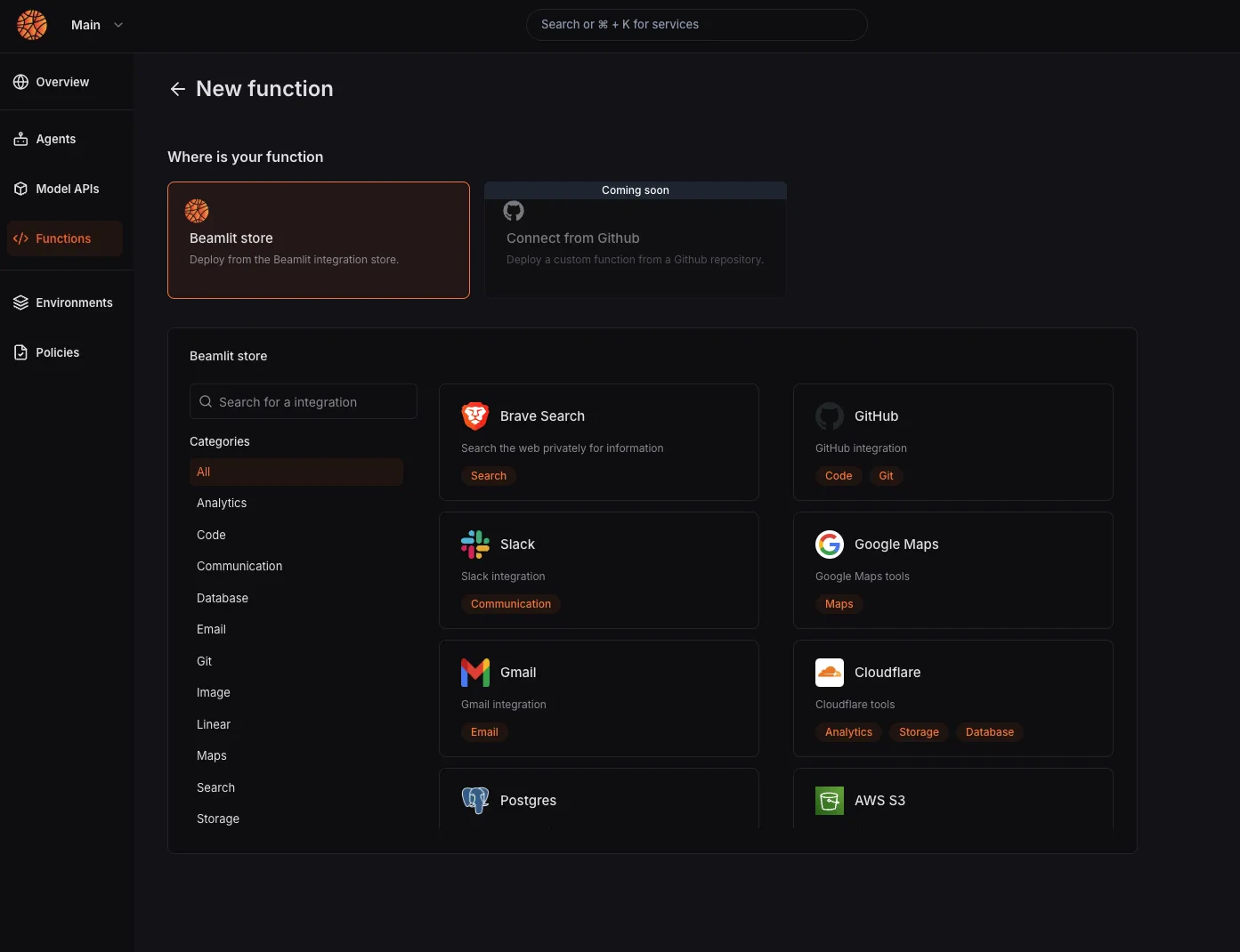
- Brave Search
- Google Maps
- Slack
- Linear
- AWS SES
- Cloudflare
- PostgreSQL
- AWS S3
- Dall-E
Agentic traces
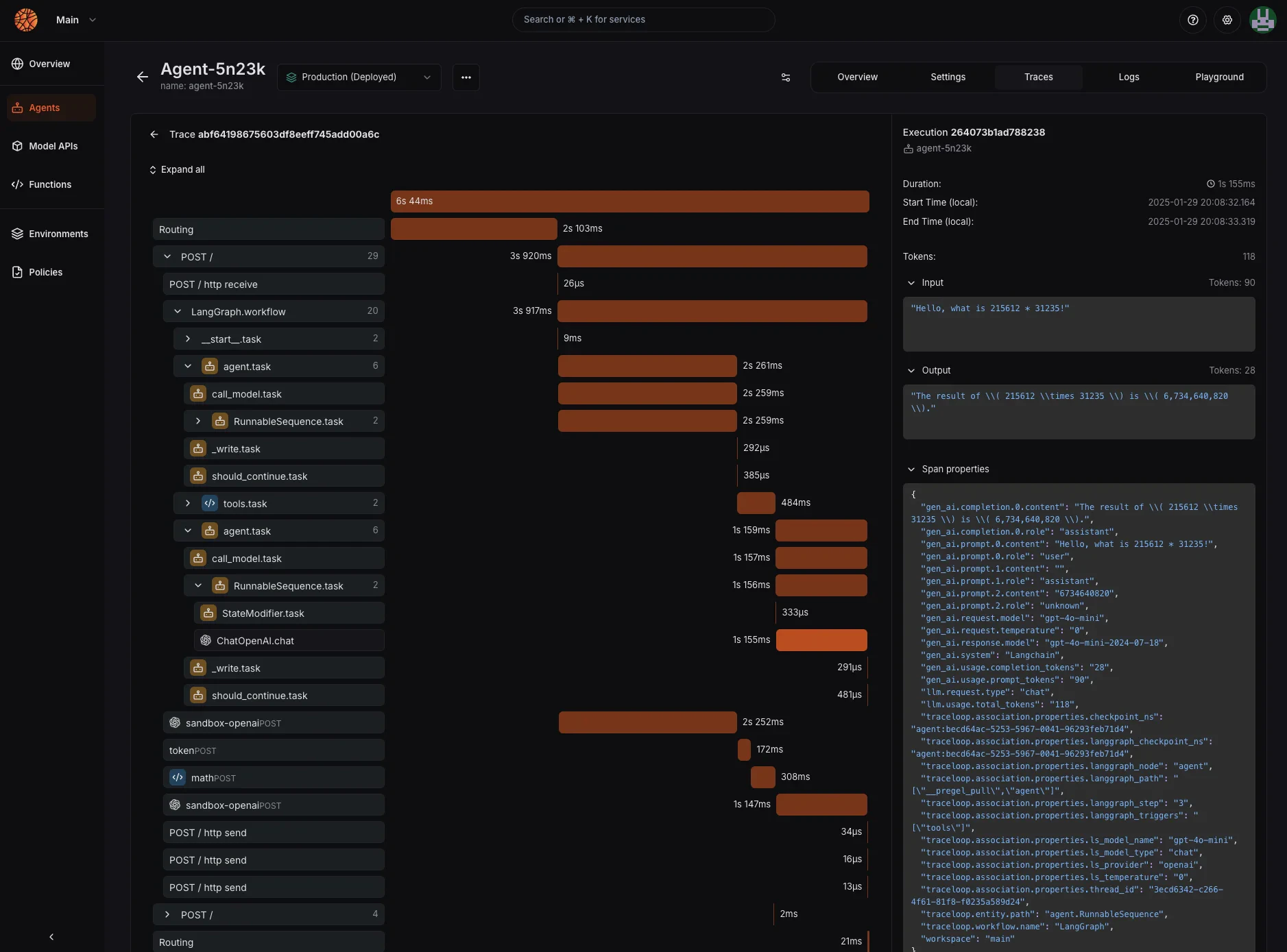
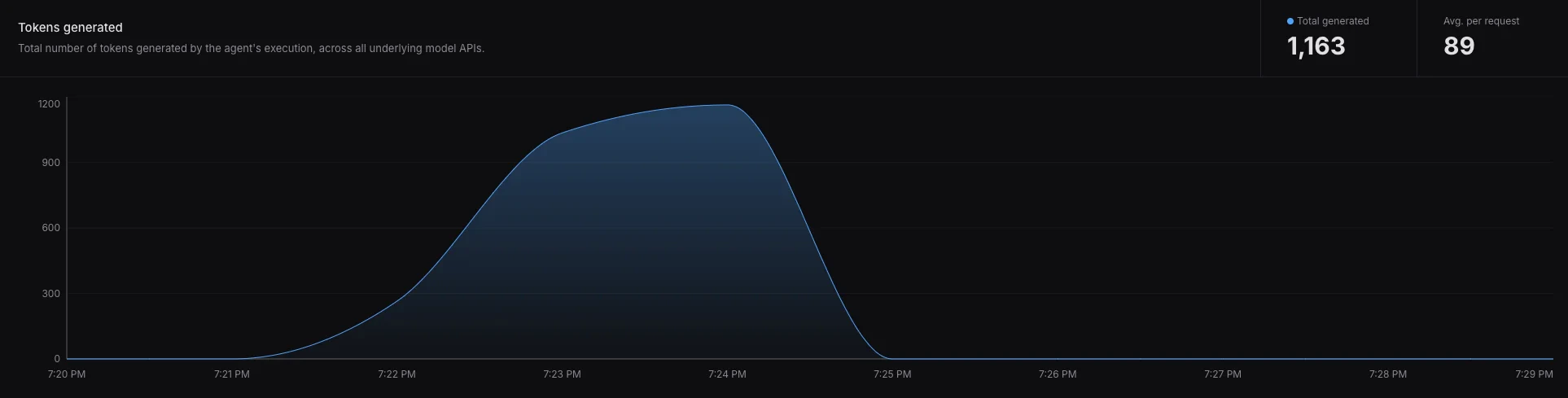
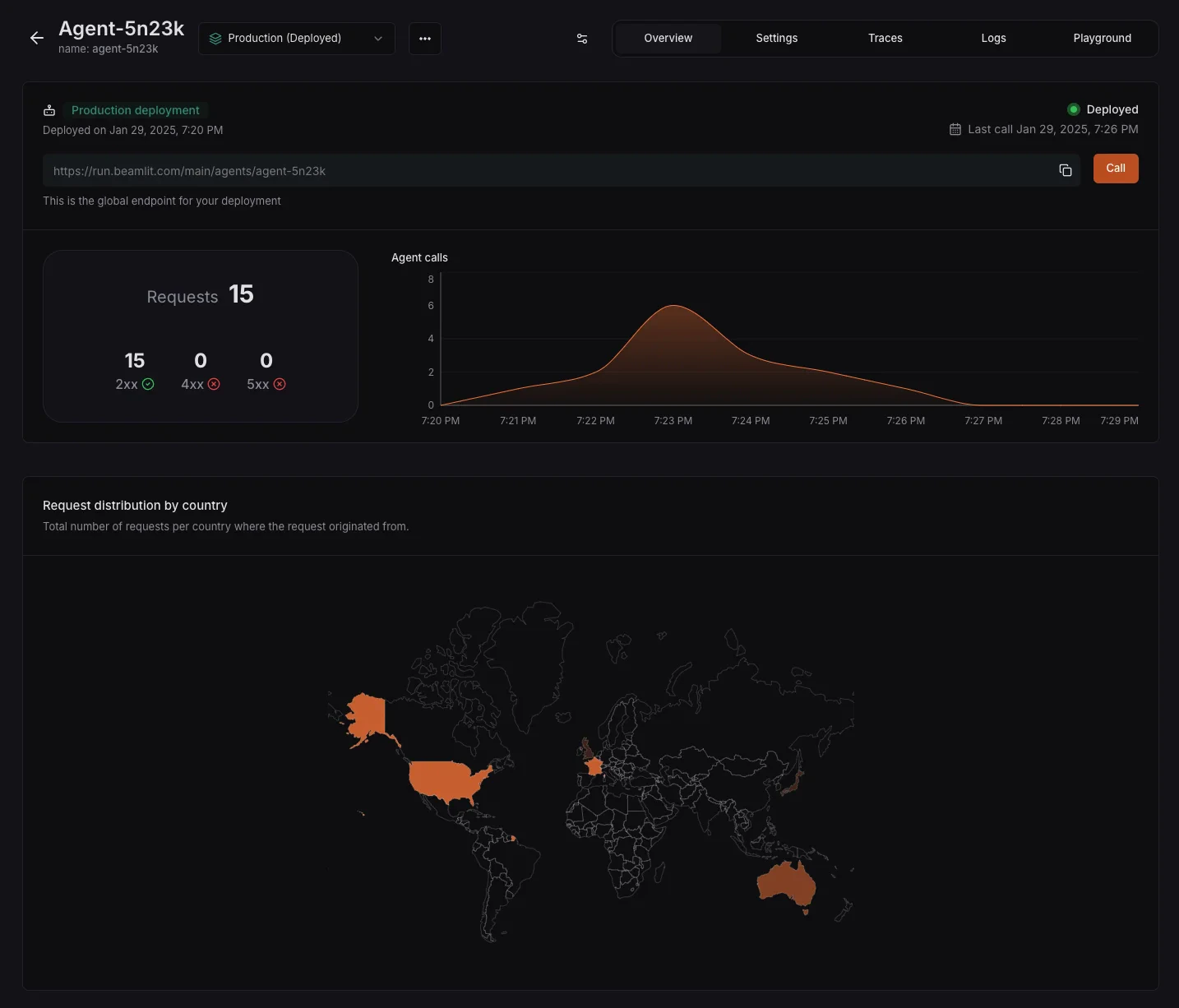
- Added Agent Observability suite, with traces of agents’ requests.
- Added ability to launch a request in debug mode from the Playground to save the trace
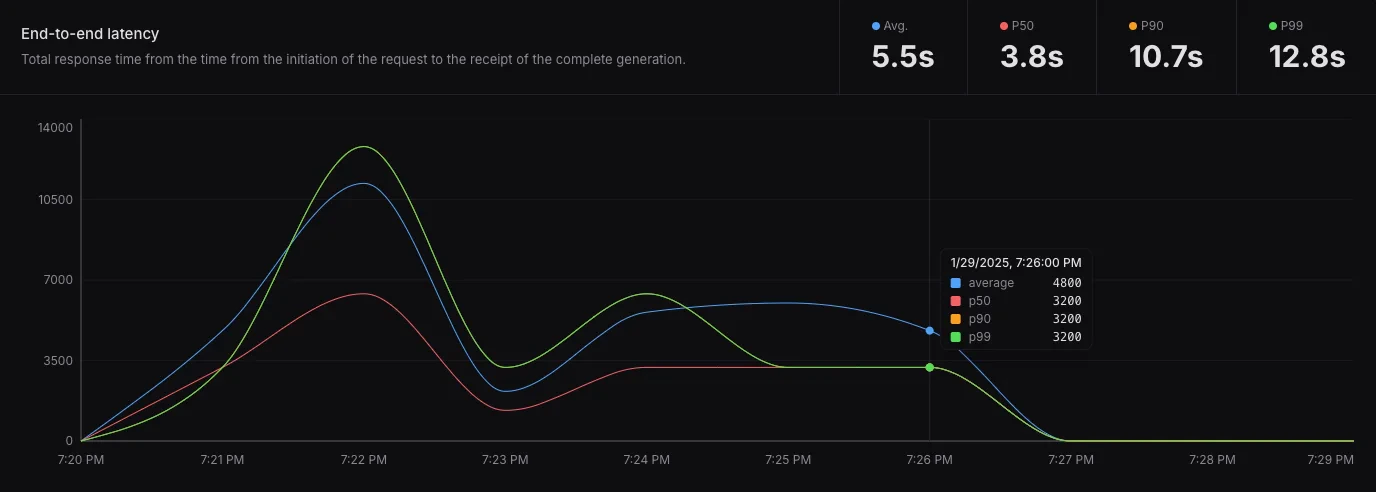
Latency metric tracking
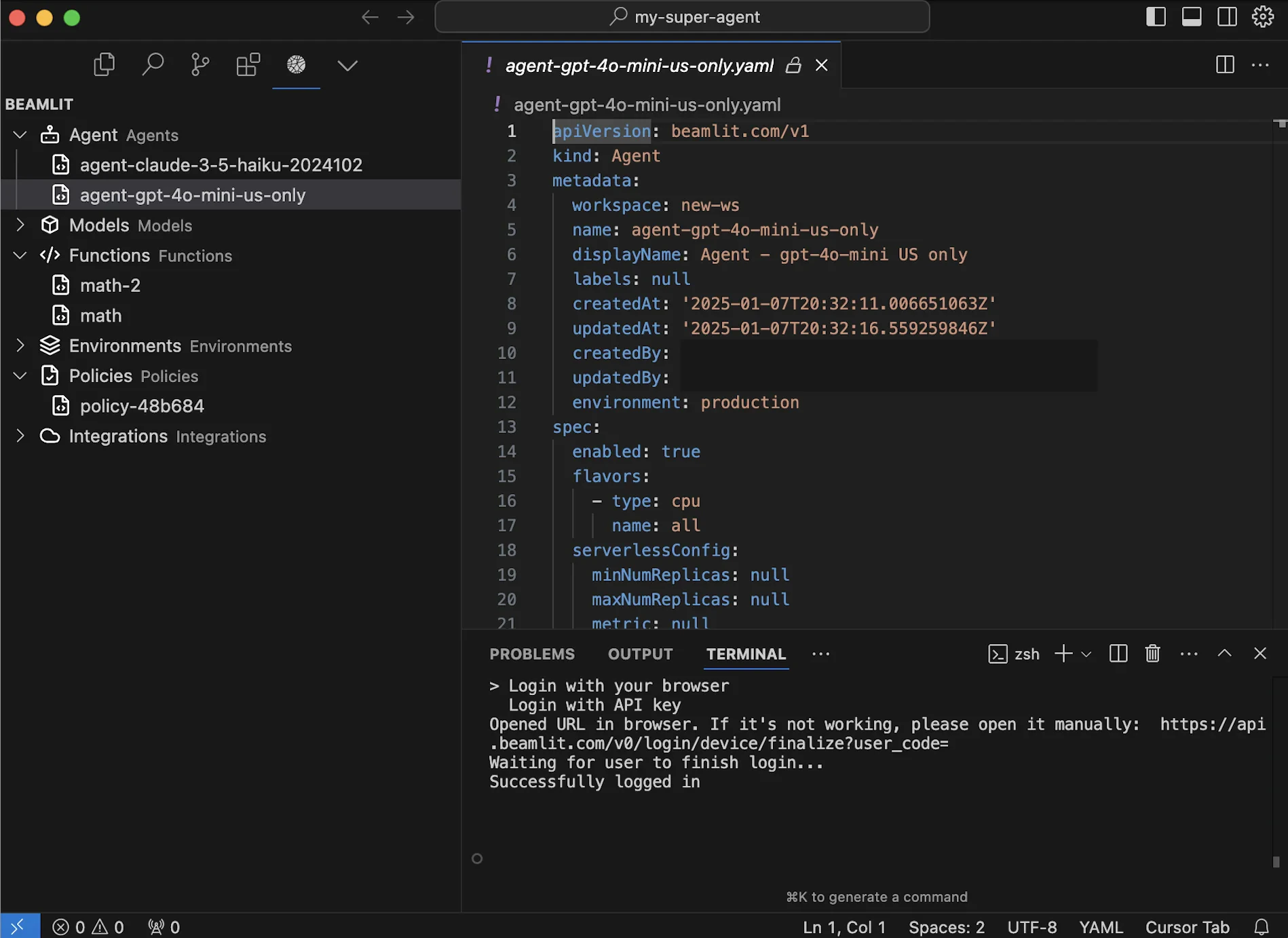
Beamlit extension for VScode
New Beamlit console
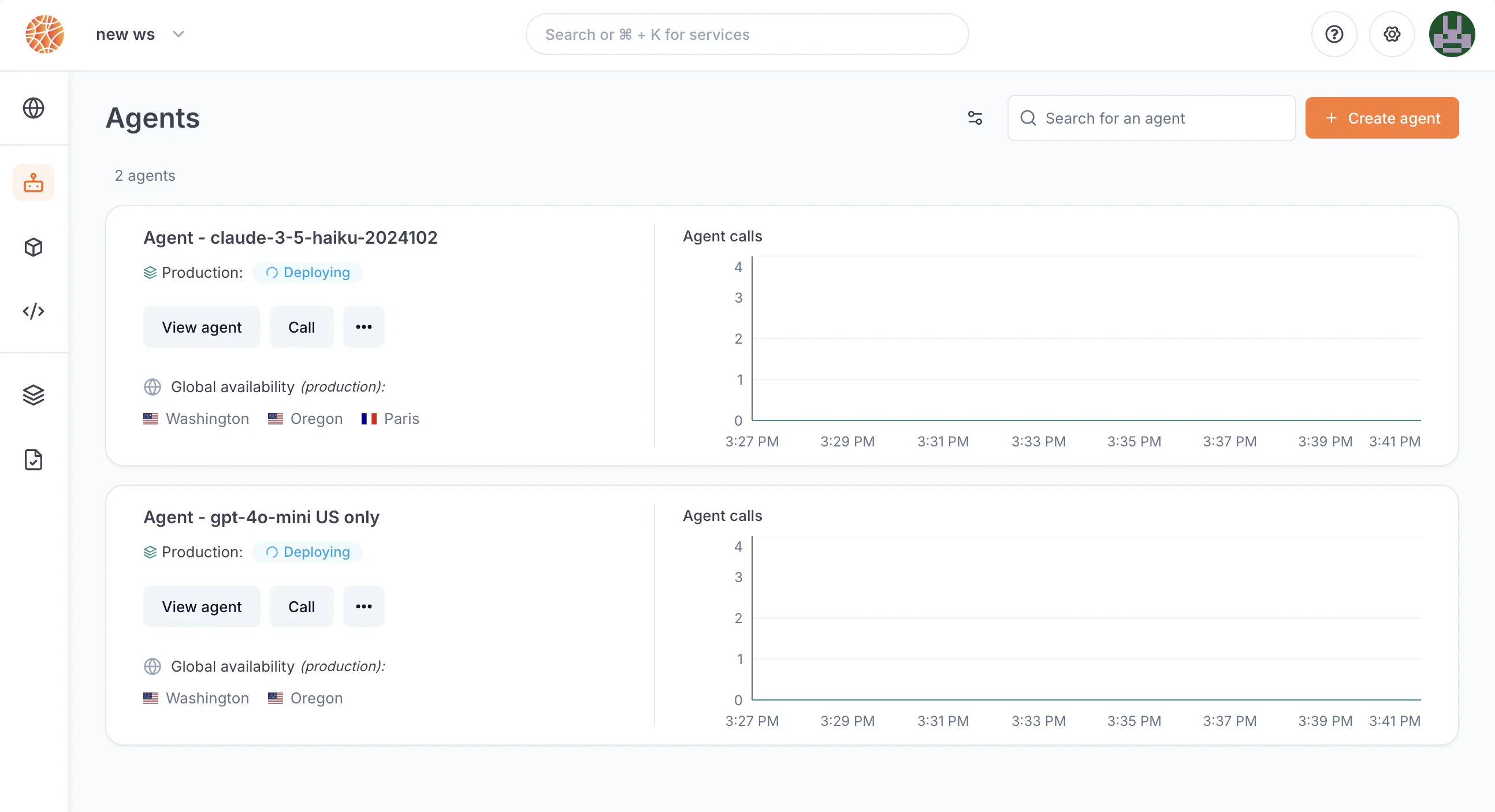
- Beamlit console has been completely reworked, in order to center the experience around agents and their deployments.
- Removed custom model deployments and renamed external models “model APIs”
- Added statuses for deployments
- Added playbook to deploy an agent from local code in the Beamlit console
Visual aspect of charts is improved
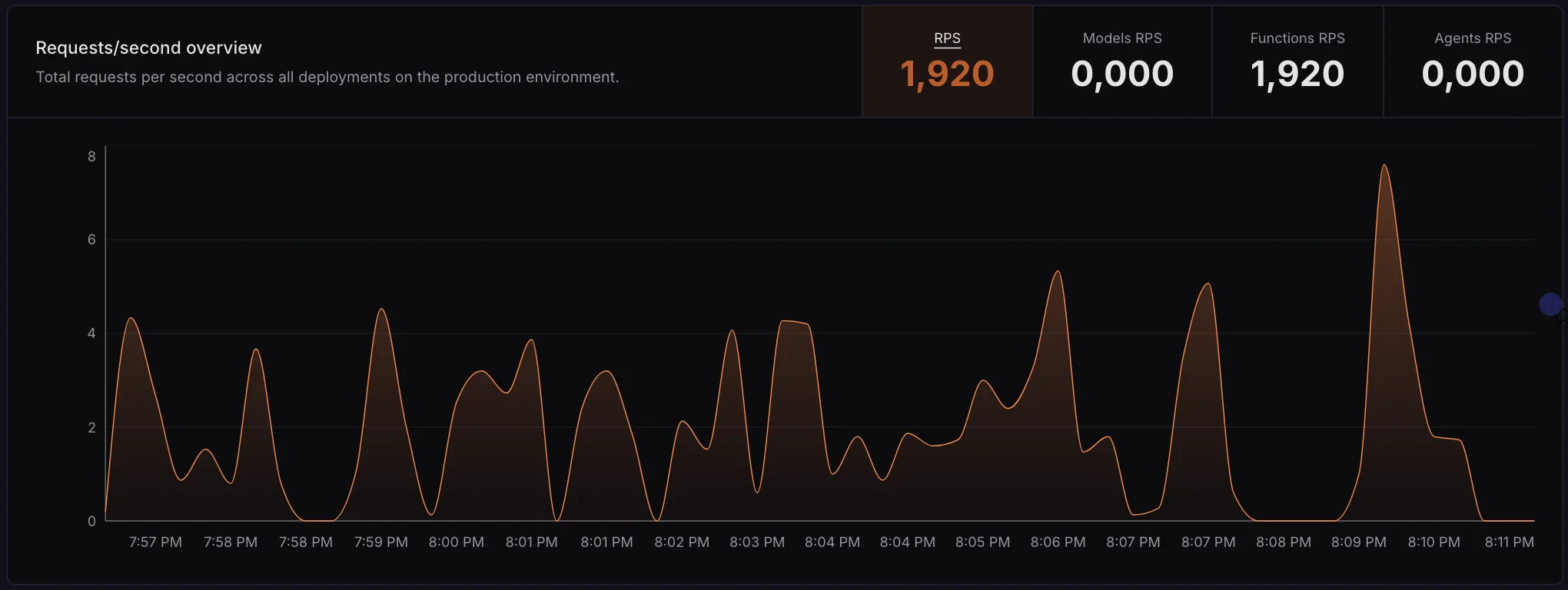
- Improved visual aspect of charts and options to change time window of screens
- API reference for agents’, models’ and functions’ deployments has been updated
CLI support for running agents and functions
You can now use the Beamlit CLI to run requests on agents (bl run agent) and functions (bl run function)Beamlit is currently in private alpha. Join our waitlist for access today.Added new metric: total number of requestsBeamlit is currently in private alpha. Join our waitlist for access today.
- You can now develop (and run) your own AI agents locally with the Beamlit SDK.
- Use CLI command
bl create-agent-app your-agent-nameto initialize a repository with the code skeleton to get started - Use CLI command
bl serve --localto run your AI agent on your local machine
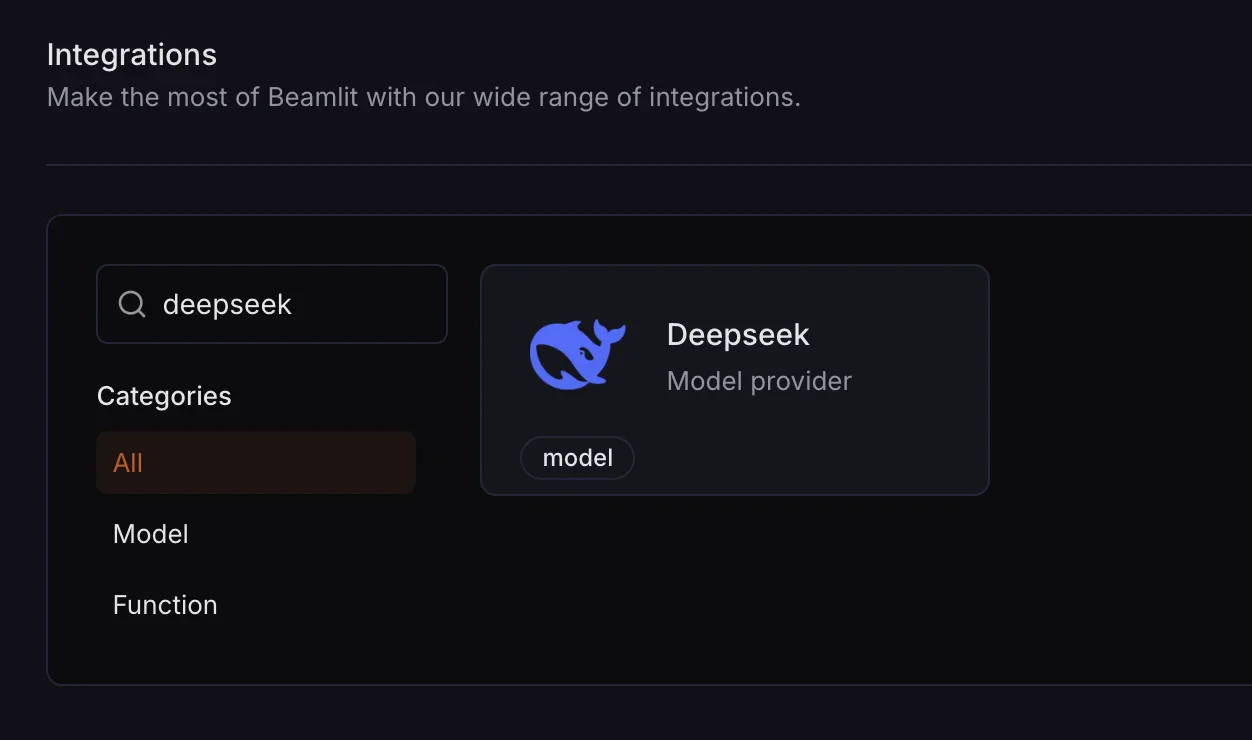
2 new integrations are available to connect to external AI model providers:
- Cohere
- xAI
You can now use a GitHub Action to directly deploy Beamlit objects (agents, functions, models) from your GitHub Workflows.Beamlit is currently in private alpha. Join our waitlist for access today.
Happy Thanksgiving! You can now connect external model providers as integrations in your Beamlit workspace in order to leverage Beamlit’s accelerated Global Inference Network to unify calls to third-party APIs.
- OpenAI
- Anthropic
- Mistral AI
Experience Beamlit first-hand and discover what it can do for you. Join the private alpha waitlist for Beamlit now.
Features
- Agents: run AI agents across multiple locations, so your consumers get the lowest latency and the highest availability.
- Models: connect or deploy generative AI models behind our global gateway, from public endpoints to custom fine-tuned models
- Functions: run serverless functions that provide your agents with the tools to interact with their environment
- Global Inference Network: make your agents available globally and locally with a network designed for AI inferences that optimizes for mission-critical latency while respecting your deployment, routing and cost policies.
- Environments: manage compliance at enterprise level by enforcing policies directly in your development life-cycle
- Policies: define global rules and strategies regarding your deployment placement, inference request routing, and hardware usage.